Ying Wen
Home Publications Projects Teaching Blog AI Art 🌐 中文
🌐 中文
Home Publications Projects Teaching Blog AI Art

AI × Abstract Art

AI Art

What does intelligence look like when rendered through the visual vocabulary of abstract art's greatest minds — learning, generalization, computation, approximation, and emergence?

These pieces use the compositional methods of suprematism, neoplasticism, and abstract expressionism to translate core AI concepts into images that can be seen as well as reasoned about. They are not illustrations for papers but another kind of research note — language holds the concepts; geometry, light, and tension carry the intuition.

AI Learning from Experience

After Kazimir Malevich · Suprematism

The dominant black geometric body is the AI model itself — a deep "black box." Surrounding it, vivid fragments of red, yellow, and blue represent raw data and scattered experience, colliding and being absorbed into the centre. The sharp diagonal — a red beam — embodies gradient descent, cutting through chaos toward order. In Suprematism, the black square is the supreme origin; here it becomes the birthplace of cognition.
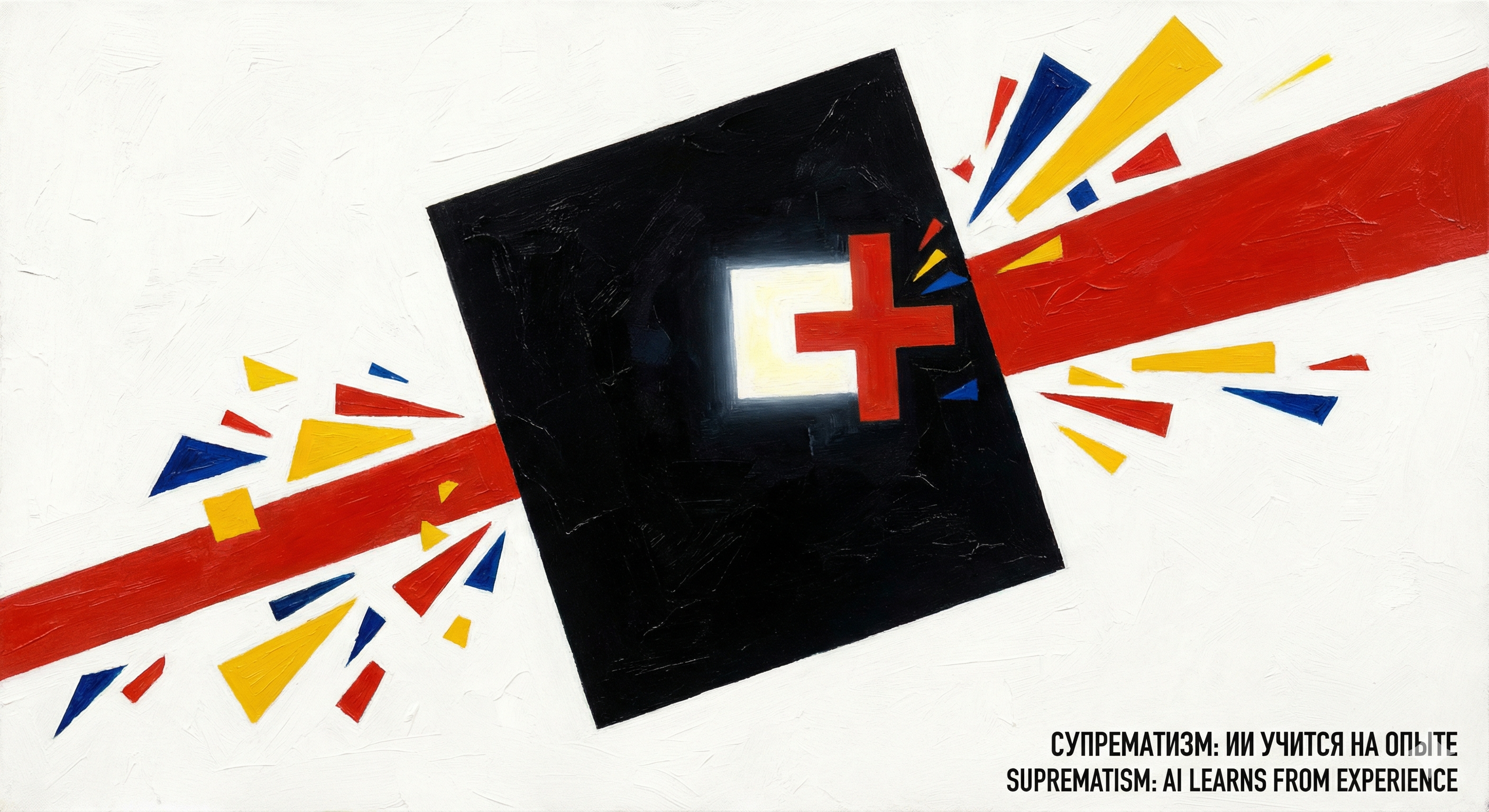
AI Learning from Experience

AI Learning from Experience

After Kazimir Malevich · Suprematism

The dominant black geometric body is the AI model itself — a deep "black box." Surrounding it, vivid fragments of red, yellow, and blue represent raw data and scattered experience, colliding and being absorbed into the centre. The sharp diagonal — a red beam — embodies gradient descent, cutting through chaos toward order. In Suprematism, the black square is the supreme origin; here it becomes the birthplace of cognition.
AI Learning from Experience

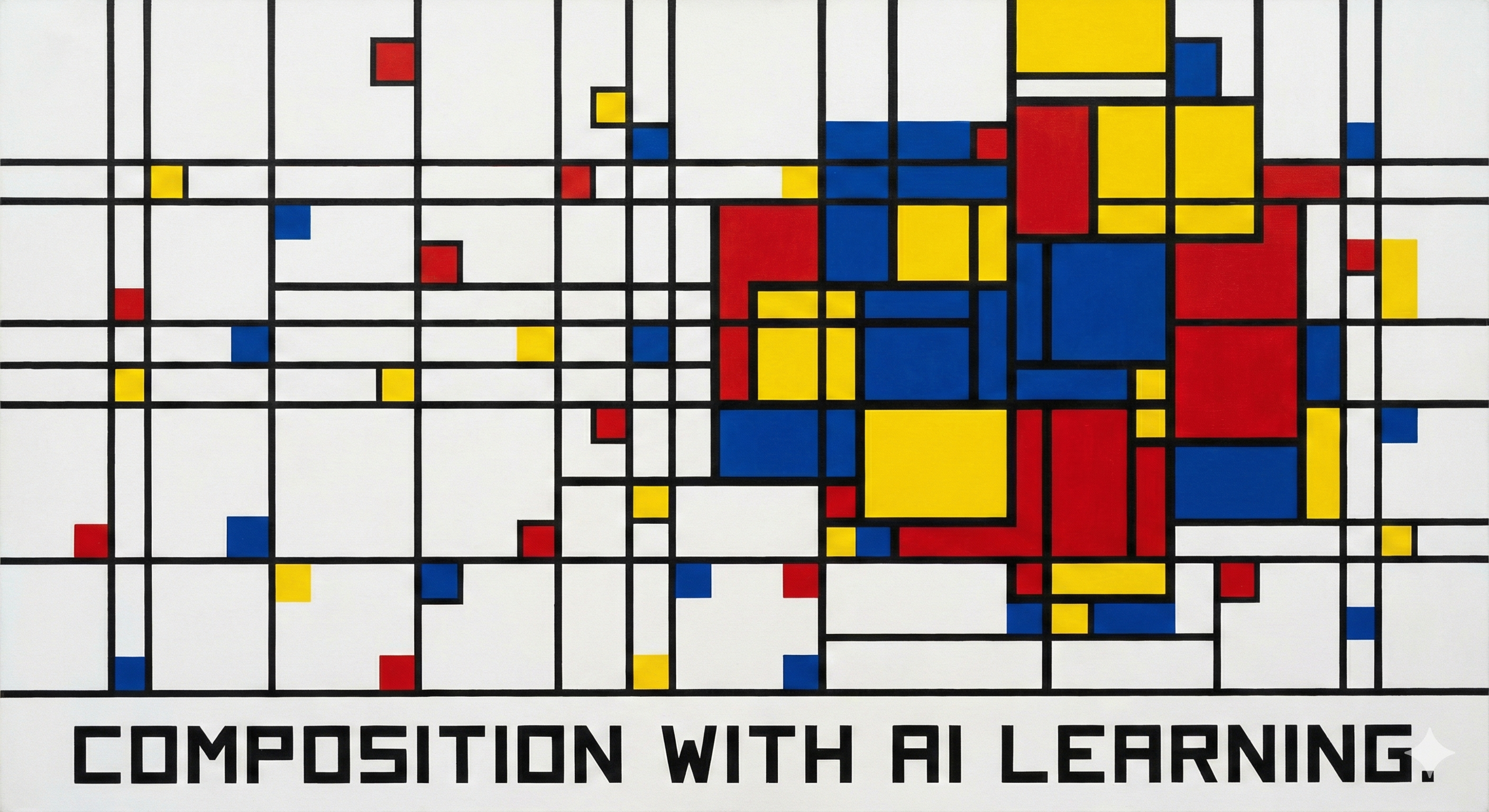
After Piet Mondrian · Neoplasticism

The rigid black grid is the algorithmic framework — the architecture, activation functions, and loss constraints within which all learning must occur. Scattered small colour blocks on the left are isolated data points; the dense, interlocking cluster on the right is integrated knowledge. The visual narrative flows from sparse to dense: raw experience processed into structure. Mondrian strips reality down to primary elements; the AI does the same through feature extraction and dimensionality reduction.

AI Learning from Experience

AI Learning from Experience

After Piet Mondrian · Neoplasticism

The rigid black grid is the algorithmic framework — the architecture, activation functions, and loss constraints within which all learning must occur. Scattered small colour blocks on the left are isolated data points; the dense, interlocking cluster on the right is integrated knowledge. The visual narrative flows from sparse to dense: raw experience processed into structure. Mondrian strips reality down to primary elements; the AI does the same through feature extraction and dimensionality reduction.

AI Learning from Experience

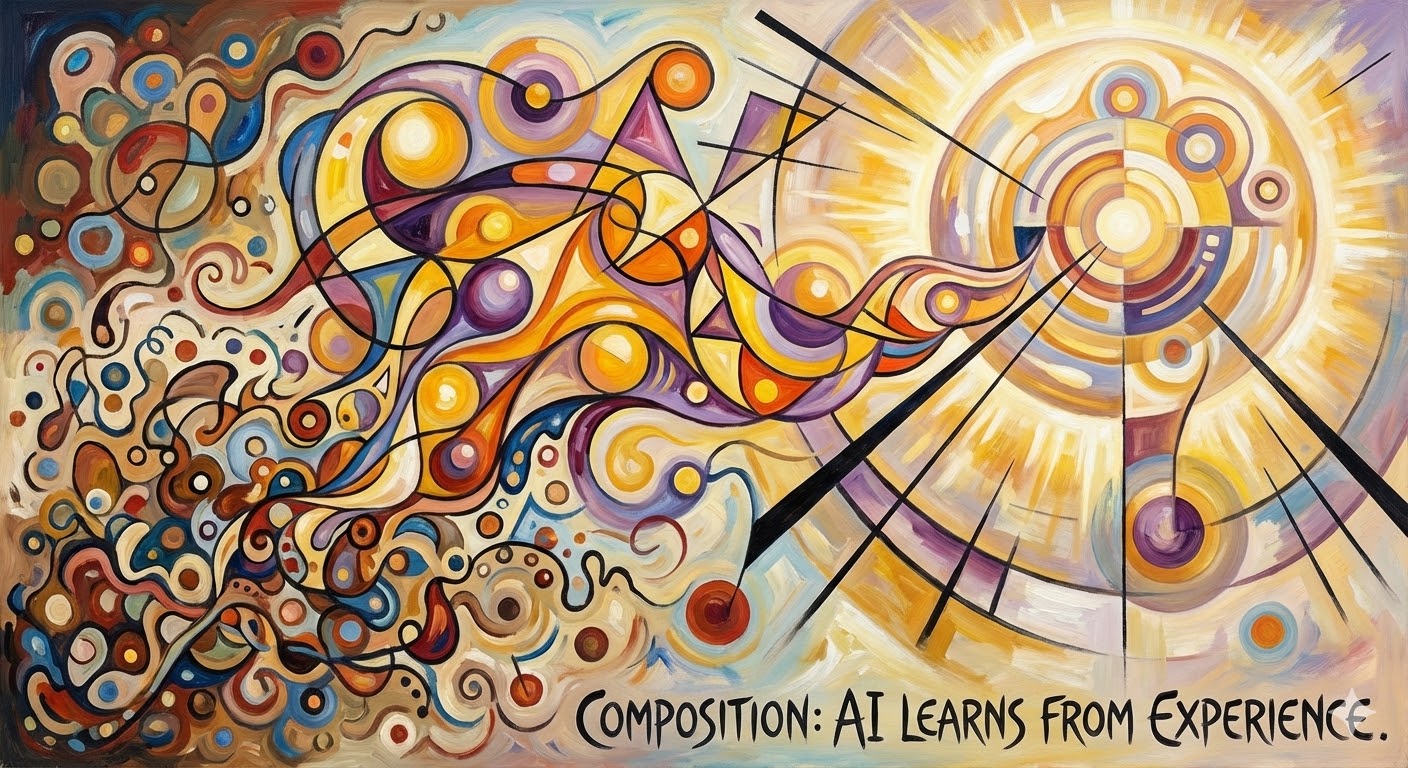
After Wassily Kandinsky · Abstract Expressionism

A spiritual journey from chaos to illumination. The lower-left is dark, muddy, teeming with undifferentiated blobs — raw, noisy data. Vision flows upward to a radiant, sun-like structure of concentric circles and geometric rays: the trained model, capable of prediction and understanding. The river of transformation between them — shapes brightening, lines connecting circles — is the training process itself. Sharp black lines cut through soft organic forms: algorithmic rigour taming the organic complexity of experience.

AI Learning from Experience

AI Learning from Experience

After Wassily Kandinsky · Abstract Expressionism

A spiritual journey from chaos to illumination. The lower-left is dark, muddy, teeming with undifferentiated blobs — raw, noisy data. Vision flows upward to a radiant, sun-like structure of concentric circles and geometric rays: the trained model, capable of prediction and understanding. The river of transformation between them — shapes brightening, lines connecting circles — is the training process itself. Sharp black lines cut through soft organic forms: algorithmic rigour taming the organic complexity of experience.

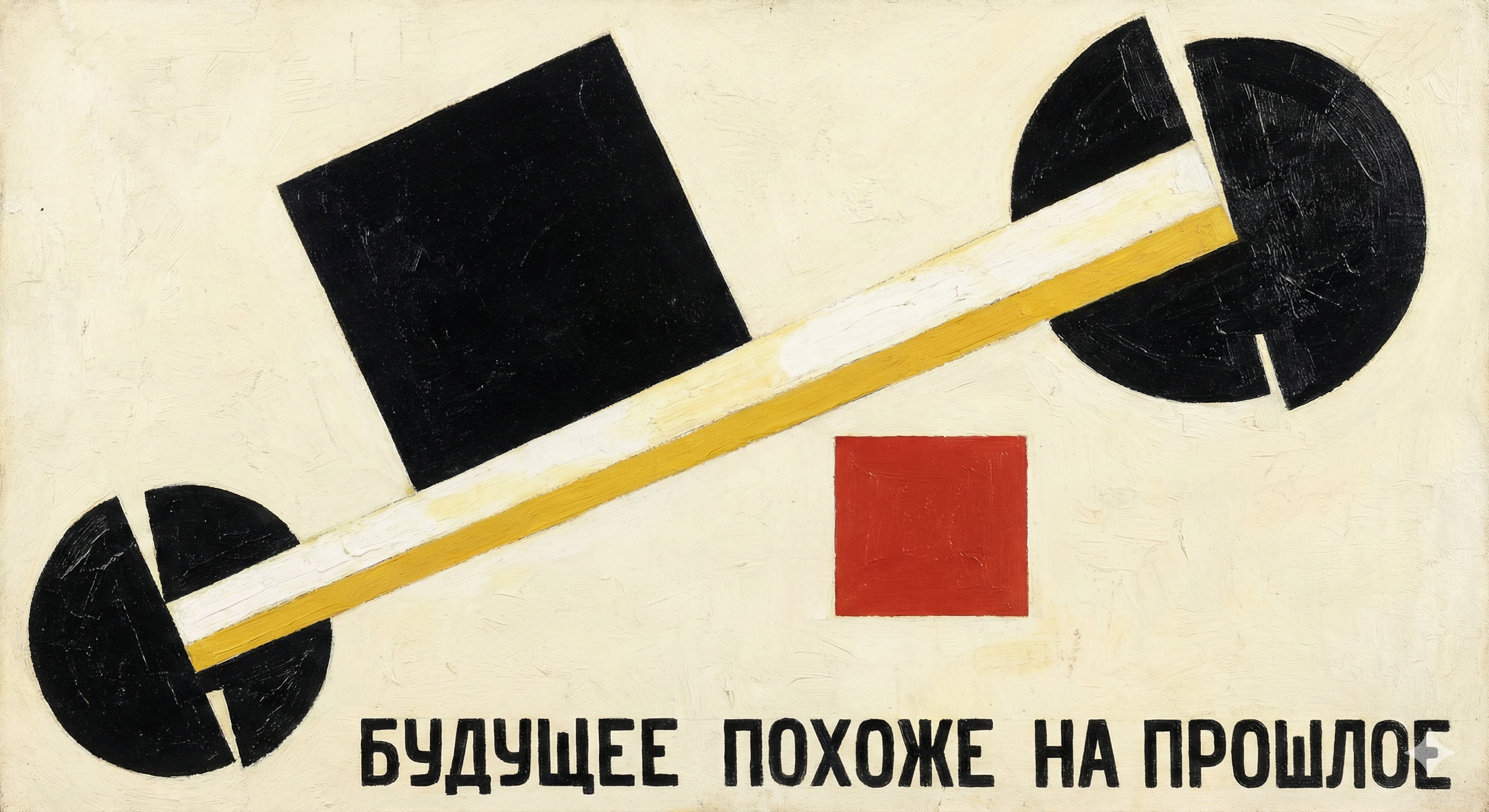
The Bitter Lesson — Generalization Hypothesis

After Kazimir Malevich · Suprematism

Visualising Rich Sutton's generalization hypothesis: "The future will resemble the past." The large black square (lower-left) is the Past — accumulated experience, the knowledge bedrock. The small black square (upper-right) is the Future — identical in nature but distant, not yet fully unfolded. The red diagonal beam connecting them is the hypothesis itself: because past and future are structurally alike, learned experience can transfer forward. The yellow circle floating between them is the Agent — the observer in the present, acting on the bridge of generalization.

The Bitter Lesson — Generalization Hypothesis

The Bitter Lesson — Generalization Hypothesis

After Kazimir Malevich · Suprematism

Visualising Rich Sutton's generalization hypothesis: "The future will resemble the past." The large black square (lower-left) is the Past — accumulated experience, the knowledge bedrock. The small black square (upper-right) is the Future — identical in nature but distant, not yet fully unfolded. The red diagonal beam connecting them is the hypothesis itself: because past and future are structurally alike, learned experience can transfer forward. The yellow circle floating between them is the Agent — the observer in the present, acting on the bridge of generalization.

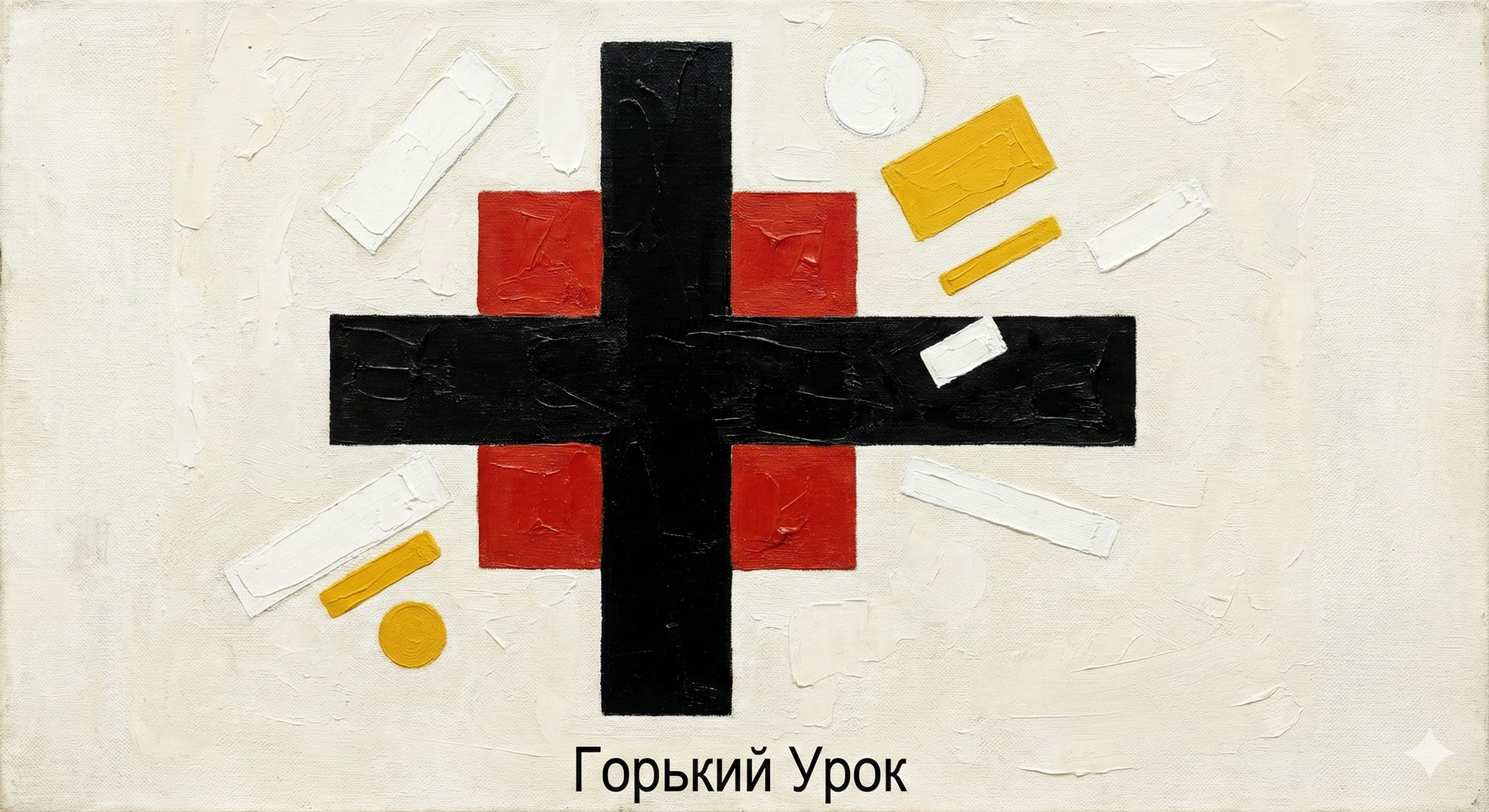
Горький Урок — The Bitter Lesson

After Kazimir Malevich · Suprematism

The overwhelming black cross is Computation — the brute force that always wins. Scattered yellow and white fragments drifting around it are human heuristics: the clever hand-crafted tricks researchers build into AI systems. They look frail and insignificant against the crushing geometry of scale. The composition is stable, almost oppressive — conveying historical inevitability. Sutton's lesson is bitter because it wounds our pride: human ingenuity is not the blueprint for building intelligence. Scale is.

Горький Урок — The Bitter Lesson

Горький Урок — The Bitter Lesson

After Kazimir Malevich · Suprematism

The overwhelming black cross is Computation — the brute force that always wins. Scattered yellow and white fragments drifting around it are human heuristics: the clever hand-crafted tricks researchers build into AI systems. They look frail and insignificant against the crushing geometry of scale. The composition is stable, almost oppressive — conveying historical inevitability. Sutton's lesson is bitter because it wounds our pride: human ingenuity is not the blueprint for building intelligence. Scale is.

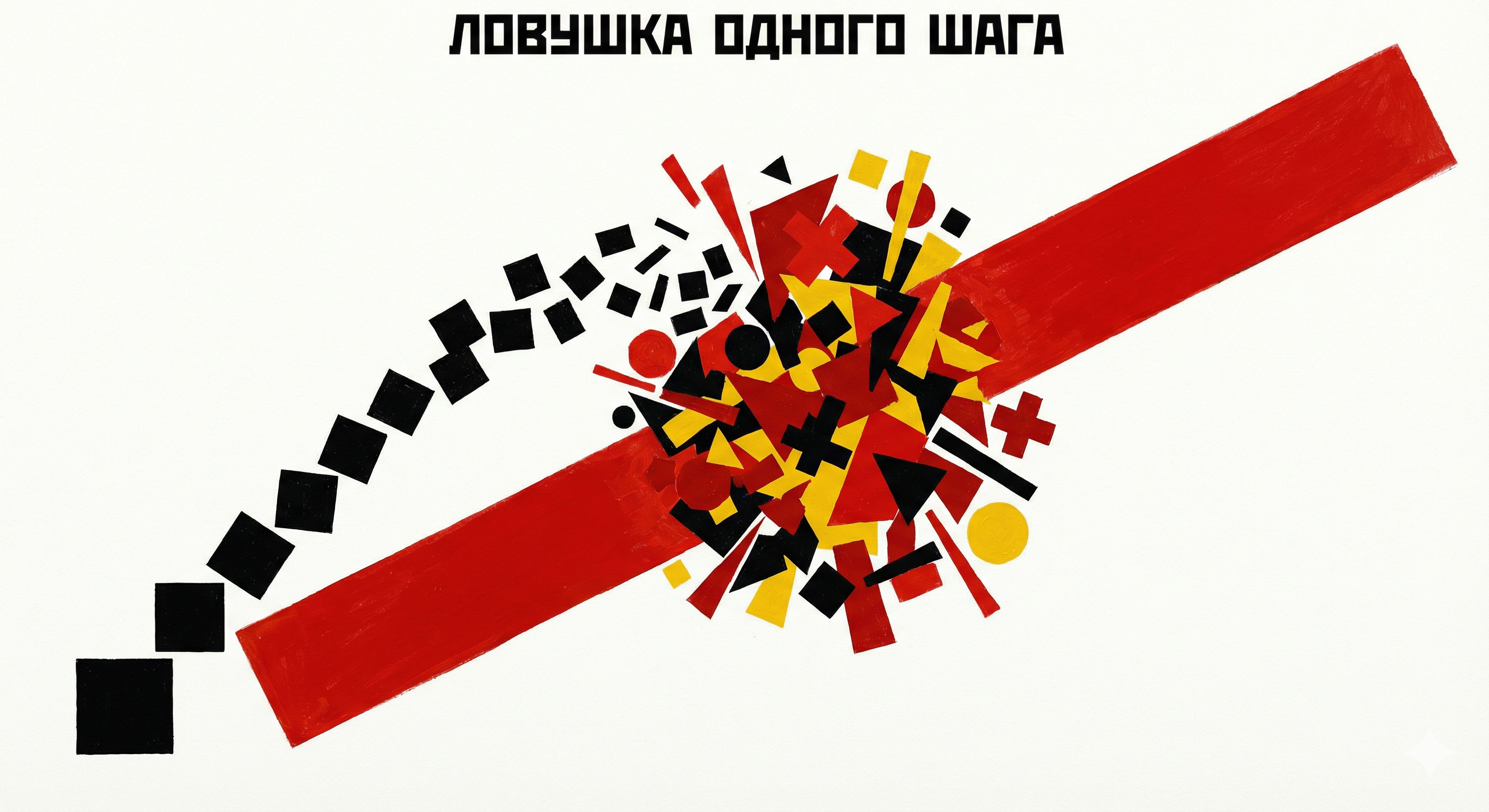
The One-Step Trap

After Kazimir Malevich · Suprematism

A perfect small black square — the idealised "one-step prediction" — launches a trajectory of similar shapes toward the upper right. But the line immediately collapses: squares tilt, scatter, and drift into a dense, explosive cloud of red, black, and yellow debris — the exponential blow-up of compound error and branching possibilities. Cutting boldly across the entire canvas, a pure red rectangle leaps from the origin directly to the far side, bypassing the chaos entirely. This is temporal abstraction — the ability to skip steps, to think in terms of options and subgoals rather than moment-by-moment predictions.

The One-Step Trap

The One-Step Trap

After Kazimir Malevich · Suprematism

A perfect small black square — the idealised "one-step prediction" — launches a trajectory of similar shapes toward the upper right. But the line immediately collapses: squares tilt, scatter, and drift into a dense, explosive cloud of red, black, and yellow debris — the exponential blow-up of compound error and branching possibilities. Cutting boldly across the entire canvas, a pure red rectangle leaps from the origin directly to the far side, bypassing the chaos entirely. This is temporal abstraction — the ability to skip steps, to think in terms of options and subgoals rather than moment-by-moment predictions.

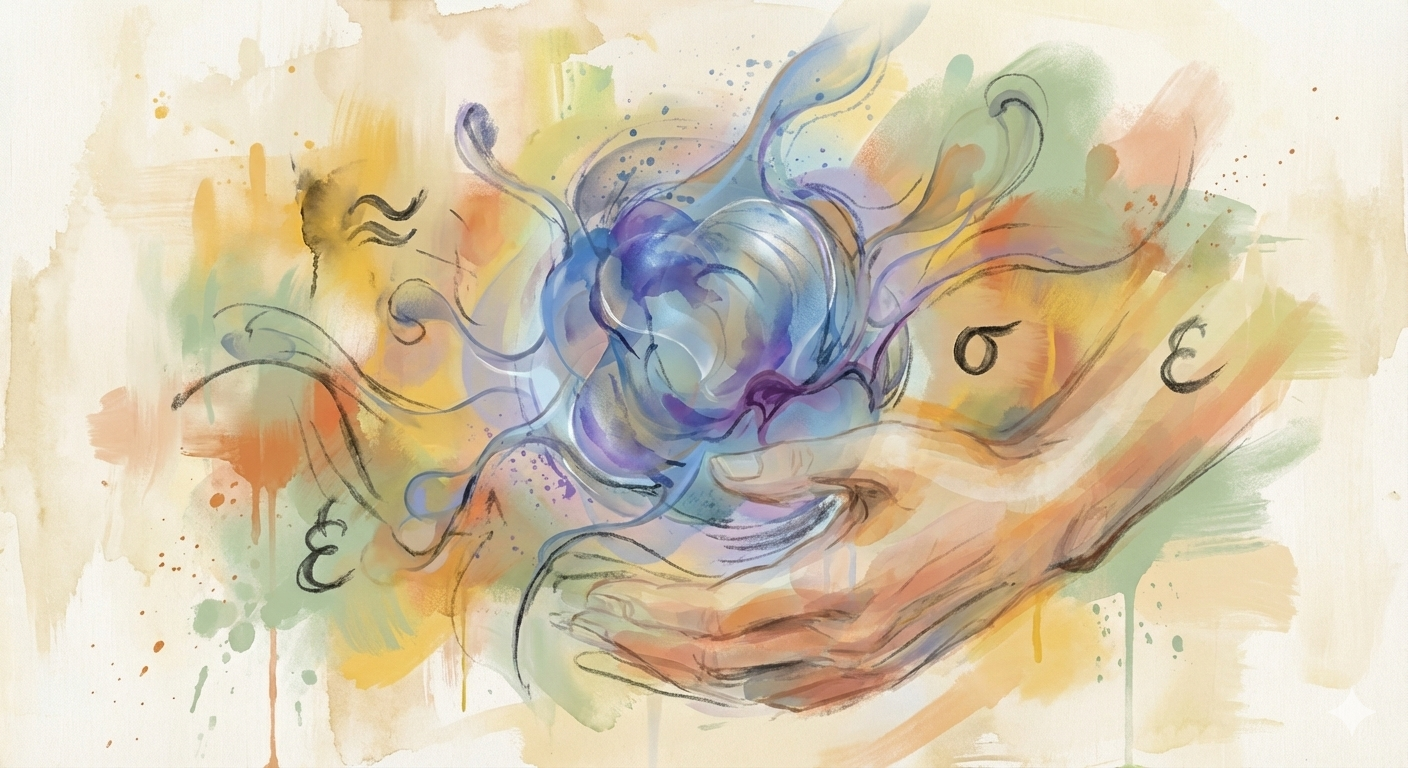
Embracing Approximation

Abstract · Digital

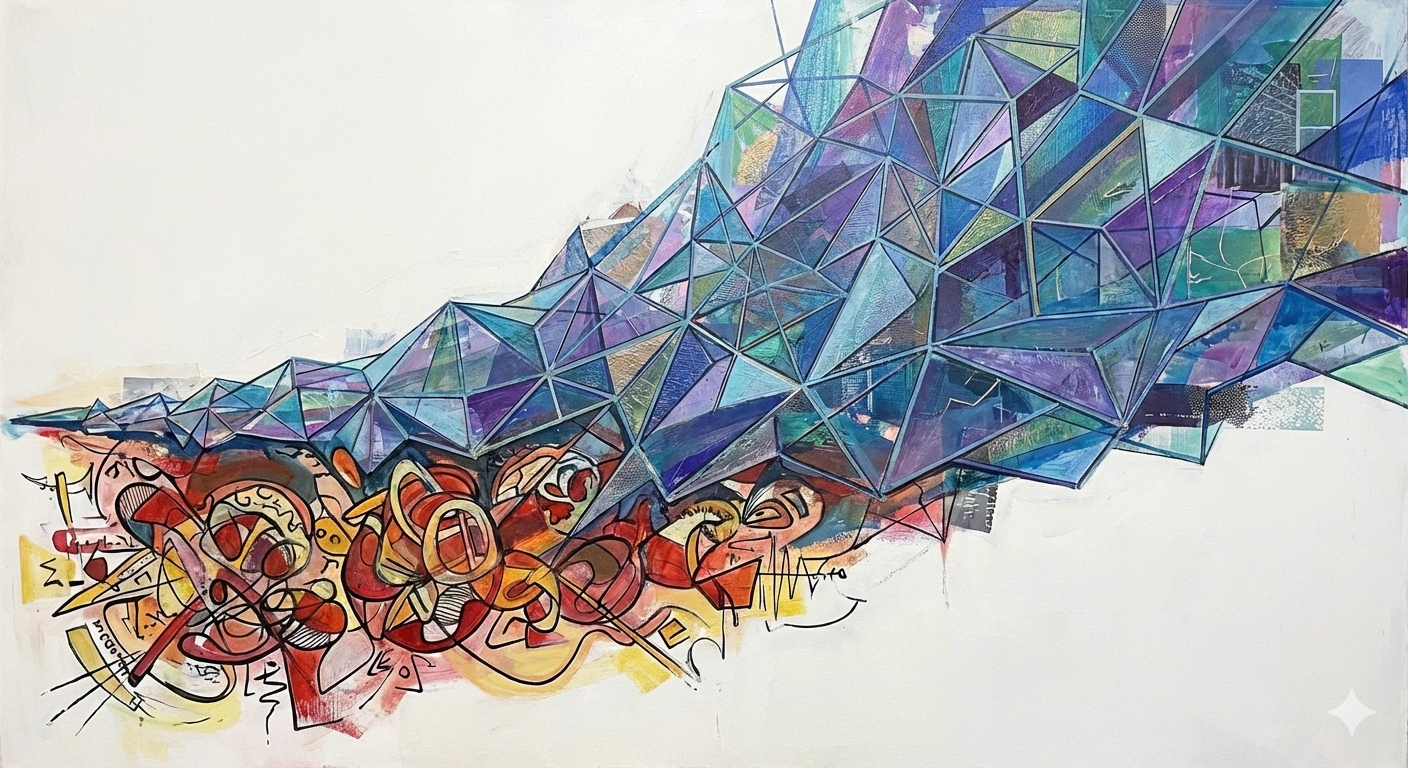
The beauty of imperfect solutions. Approximation is not failure — it is the only path to intelligence at scale. Exact methods shatter against the curse of dimensionality; approximate methods bend and flow.

Embracing Approximation

Embracing Approximation

Abstract · Digital

The beauty of imperfect solutions. Approximation is not failure — it is the only path to intelligence at scale. Exact methods shatter against the curse of dimensionality; approximate methods bend and flow.

The Bitter Lesson

Abstract · Digital

Rich Sutton's thesis in pure abstraction: general methods that leverage computation are ultimately the most effective. The lesson is bitter because it tells us that our cleverness matters less than we thought.

The Bitter Lesson

The Bitter Lesson

Abstract · Digital

Rich Sutton's thesis in pure abstraction: general methods that leverage computation are ultimately the most effective. The lesson is bitter because it tells us that our cleverness matters less than we thought.

Created in collaboration with Nano Banano × Gemini · After the pioneers of abstract art

© 2026 Ying Wen. Shanghai Jiao Tong University.

Scholar GitHub Email RSS